

The city of São Paulo has four “downtowns.” "The old center, appropriately named the Centro, still houses the judiciary and related institutions, including the main law courts and an internationally renowned law school. This is the original city of São Paulo, founded on a hilltop between two rivers, and now the original site is occupied by a partial reproduction of the old mission called the Pátio do Colégio. Nearby is the Metropolitan Cathedral. Other architecturally interesting sites are the Banespa Tower and the Martinelli Building. The two main pedestrian streets are Rua Direita and Rua São Bento which lead in the direction of the São Bento Monastery. Crossing the Vale do Anhangabaú you come out on the far side in the Praça Ramos de Azevedo, upon which stands the pretty beaux arts Teatro Municipal. Going northwards from here leads through the run-down Luz neighborhood to the high Victorian Luz Station and adjacent Luz Park. A short drive to the southwest is the second “downtown” area of Avenida Paulista, Brazil’s best-known business drag. Further southeast is Avenida Faria Lima, home to many of the headquarters of foreign investment banks. South of Faria Lima, the final downtown flares out from Avenida Berrini. This region sports the World Trade Center and dozens of other new skyscrapers." (In the next post I will show up the final downtown).
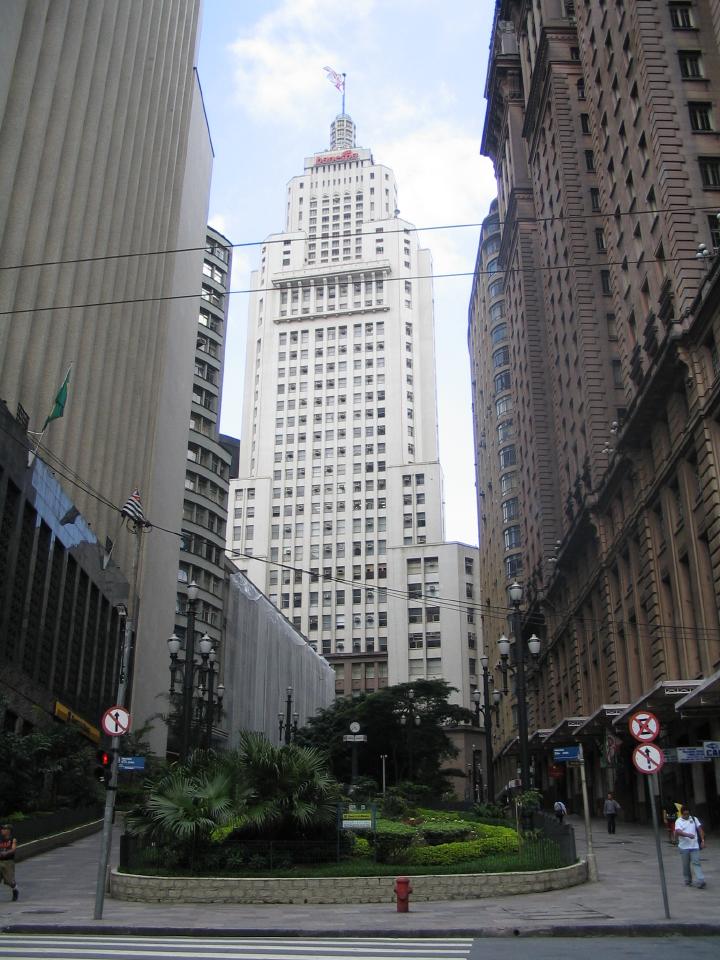 Photo by http://www.lukie.org
Three skyscraper: Banco do Brasil (Brazil Bank), Banespa Tower and Martinelli Building.
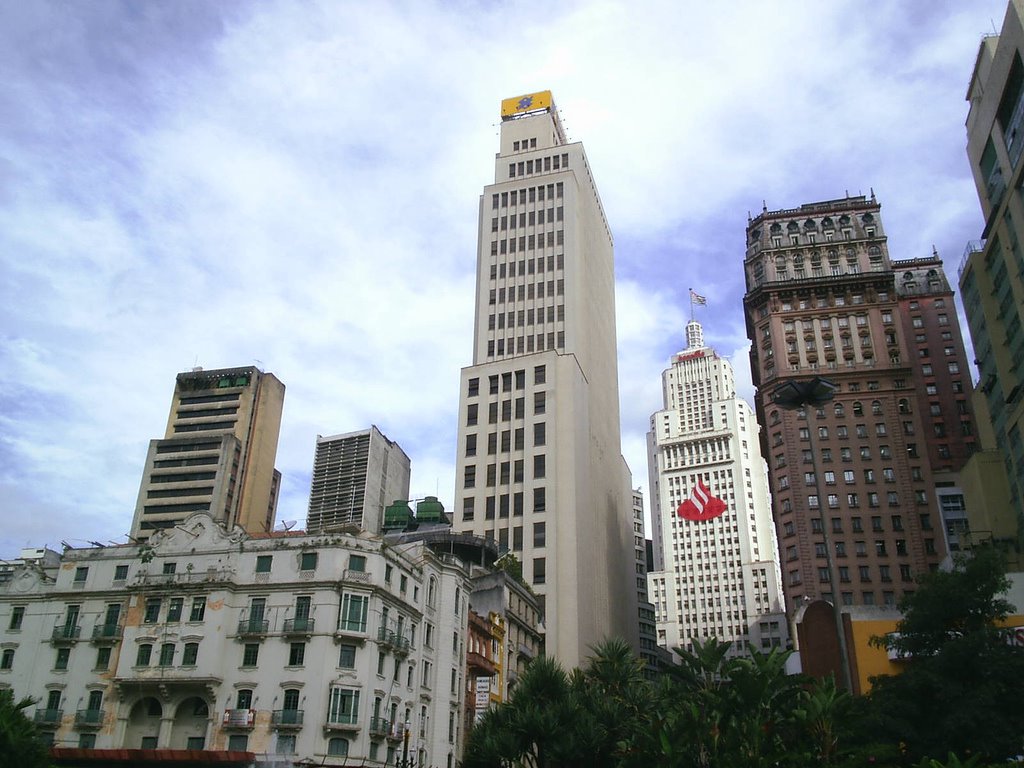 Photo by Gabriel Fernandes
 BANESPA TOWER . "This building was built in 1939, and it provides one of the most beautiful panoramic views of the city. You need to ascend to its 35th floor observation deck where you have an incredible view of high-rise towers for 360 degrees, filling every inch of land for as far as the eye can see. On clear days it is possible to see up to 40 km. In the tower’s anteroom, there is a photo exhibit about the building’s construction. Officially known as the Edíficio Altino Arantes, the building was inaugurated in 1947 and housed the headquarters the state-owned bank Banespa until it was privatized and sold to the Spanish bank Santander. The building sports architecture inspired by New York’s Empire State Building."

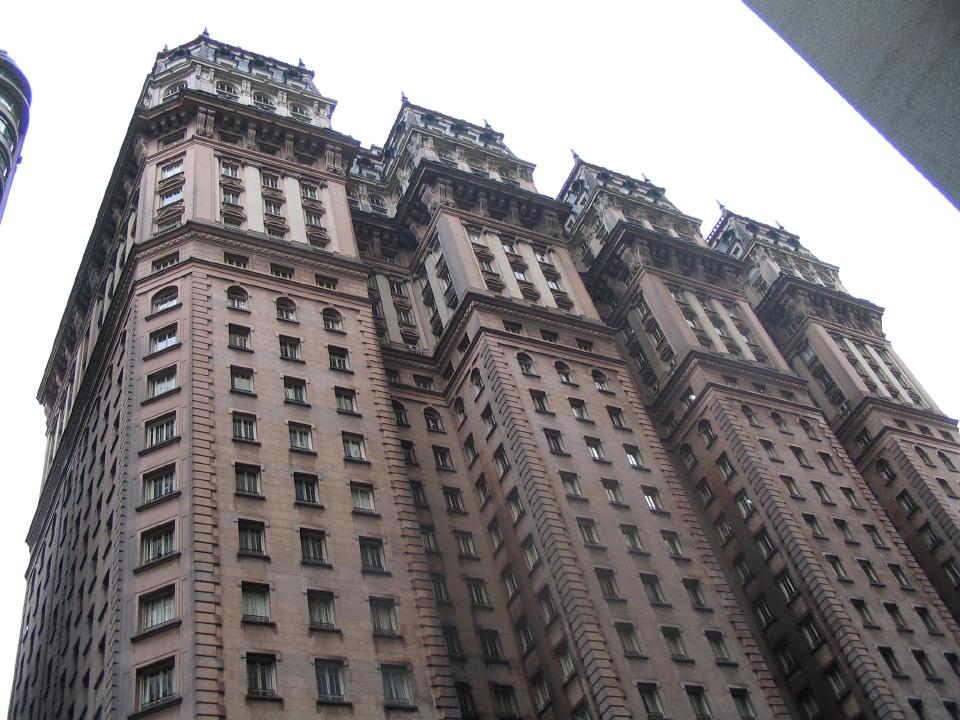 Photo by http://www.lukie.org/
 Photo by Fábio http://skyscrapercity.com/
MARTINELLI BUILDING. This first skyscraper in the city of São Paulo was built in 1929, and for a long time it was the city’s main attraction. The building is the main example of São Paulo Belle Époque luxury. In a way, it marks the transition of provincial São Paulo, from low constructions to the metropolis it is today. Martinelli Building was built by Italian immigrant-turned-count Giuseppe Martinelli. The whimsical penthouse is worth checking out. The rooftop, which has a great view, is open weekdays.
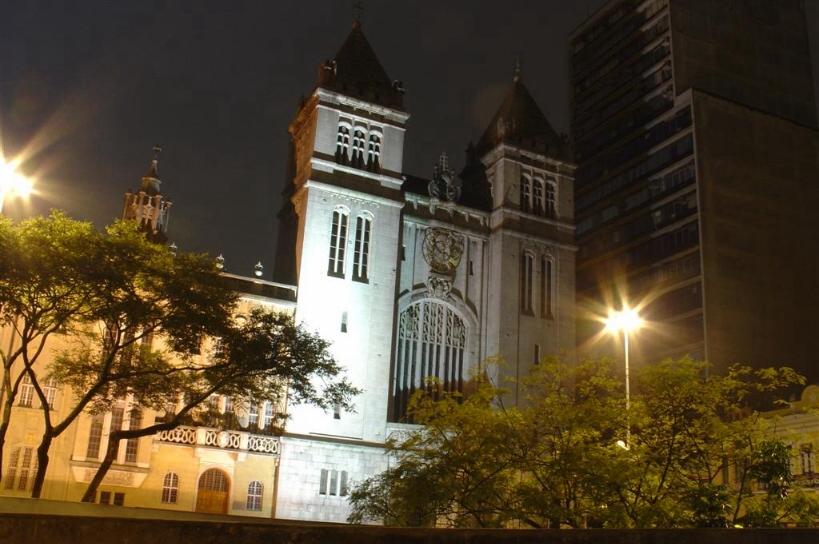
 Photo by Gutooo
SÃO BENTO MONASTERY AND CHURCH. "This is an important landmark in the history of the foundation of São Paulo. Constructed in 1600, the Mosteiro de São Bento is one of São Paulo's oldest buildings. Once inhabited by Indians, it is now home to over 40 Benedictine monks. The monastery has been renovated five times during its 400 years of existence and has a distinctive eclectic German style. The tower holds the most traditional clock in the city. It was installed in 1921. It also has beautiful stained-glass windows. The Sunday mass, with Gregorian Choir singing is well worth a visit."

Photo by http://www.lukie.org

MUNICIPAL THEATER. "The theater was built in 1903, when the coffee boom was at its peak and São Paulo at its most confident and inaugurated in 1911. Its baroque Renaissance style was inspired by the Paris Opera House. It stands out with its majestic interior and exterior construction. It held the 1922 Modern Art Week. The theatre is still the city’s main venue for classical music, and the auditorium, lavishly decorated and furnished with Italian marble, velvet, gold leaf and mirrors, can be viewed only if you’re attending a performance.
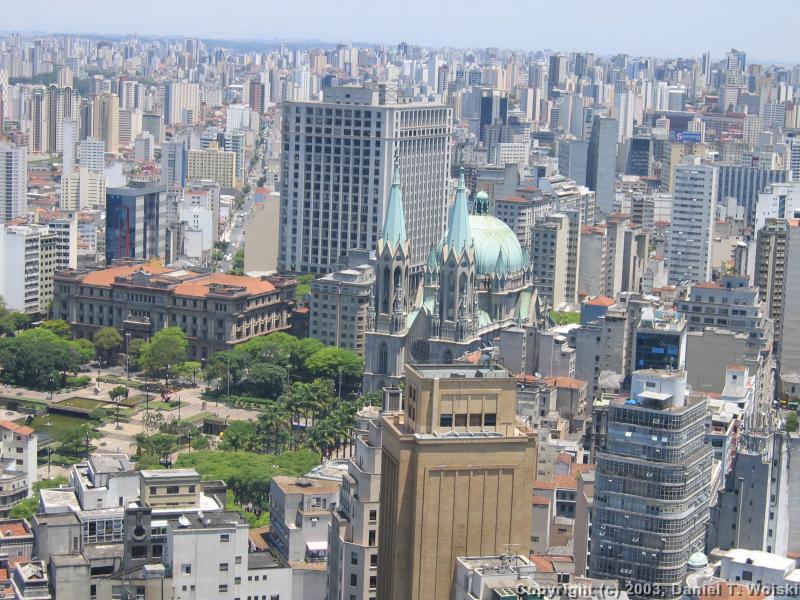
Photo by Daniel T. Woiski
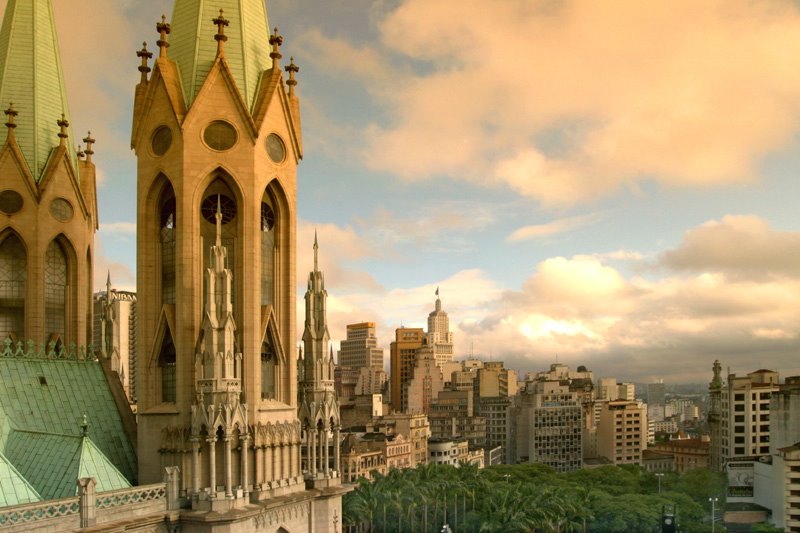 Photo by Mário Lalau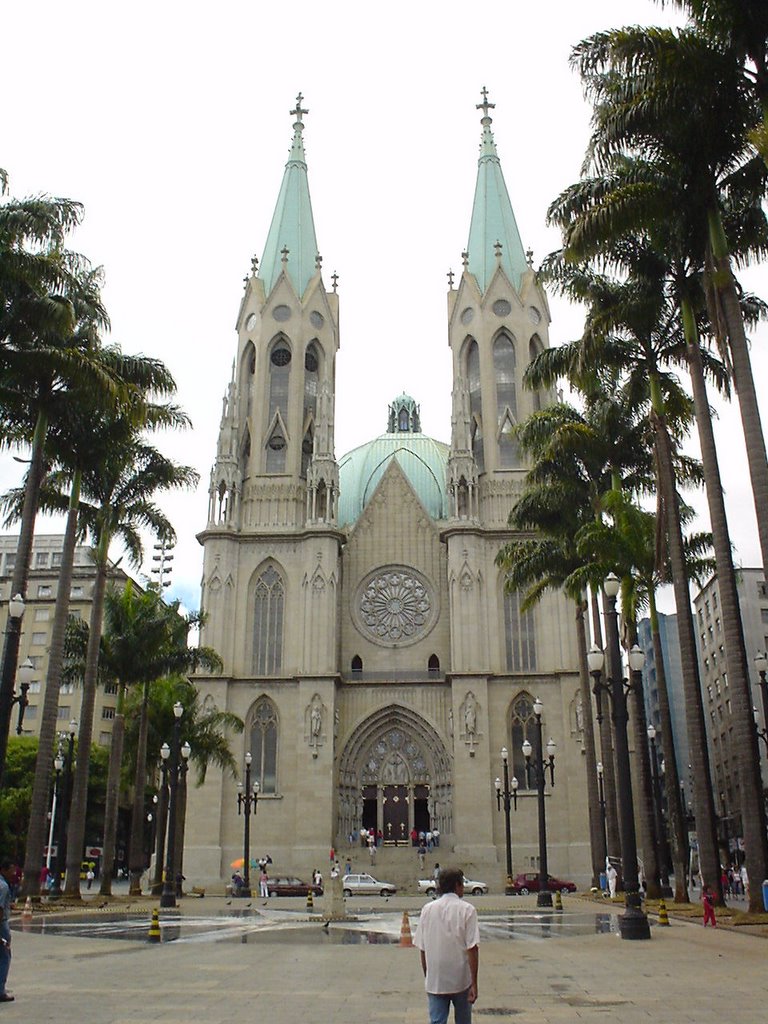
CATEDRAL DA SÉ (See's Cathedral). "The noteworthy Metropolitan Cathedral in the Praça da Sé is the city's geographical center. Construction began in 1913, but the cathedral was only inaugurated in January 1954. The most prominent features are the stained-glass windows with Biblical themes, the Italian organ with 10 thousand pipes and the carillon with its 65 bells."
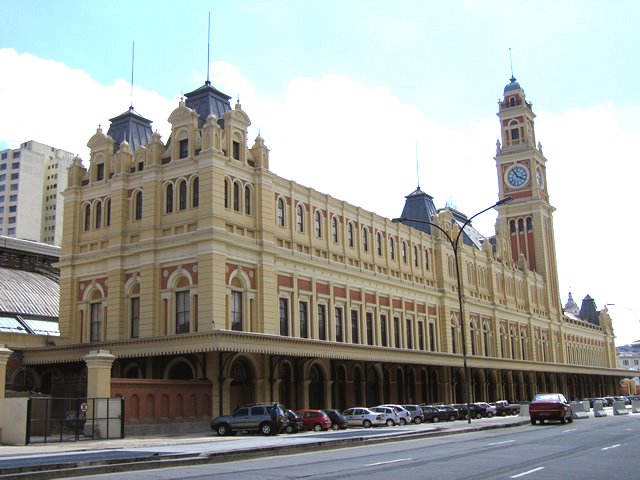
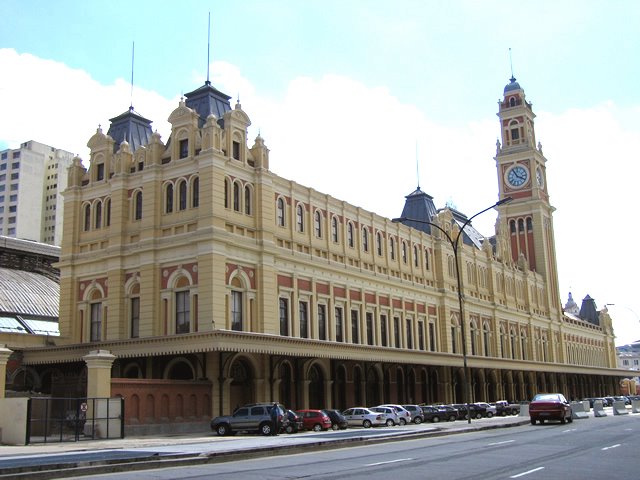
ESTAÇÃO DA LUZ . (Light's Station) "The first railway station built in São Paulo in the XIXth century. The beautiful architectural structure of the Estação da Luz railway station is a picturesque example of São Paulo’s historical center. Designed by English architect Charles Henry Driver, the building pioneered the use of iron which provided a touch of glamour to the whole structure. The station and the railway between Santos and Jundiaí were an important milestone in the development of São Paulo. The railway was used to transport coffee to the city. The station is still in use. The Estação da Luz looks exactly like a British high Victorian railway station: romanesque red-brick arches and cast-iron pillars support a single vault that covers four tracks and platforms. The materials and design were imported wholesale from England in 1901."
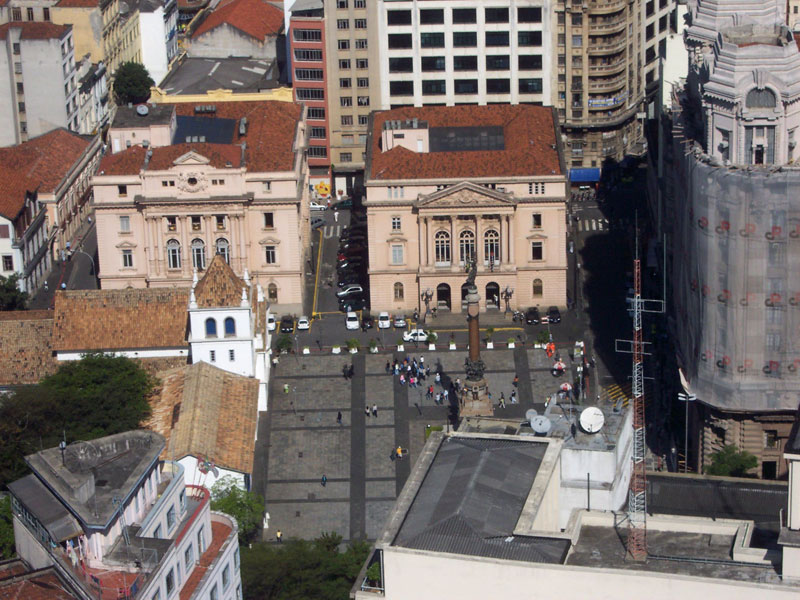 Photo by Gutooo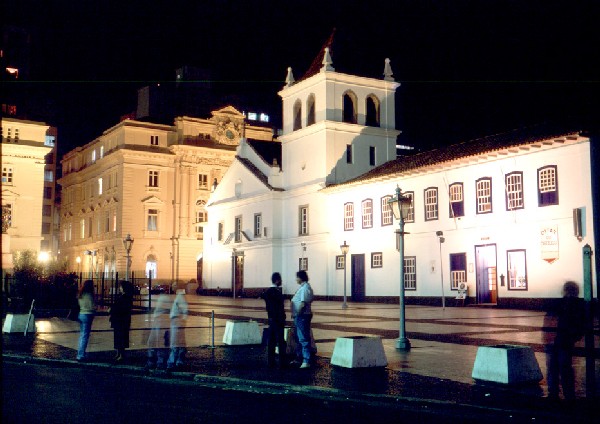
PÁTIO DO COLÉGIO. (The School Yard). "The Pátio do Colégio marks the place where the city of São Paulo was founded. It is the nucleus from which the town grew. São Paulo was founded in 1554 by Portuguese Jesuits who intended to convert the Indians to Christianity and to teach them their language. Three priests celebrated their first mass on Saint Paul’s Day on January 25, 1554; hence it became the name of the city. Pátio do Colégio is now a center for cultural activity. Initially a Jesuit school was built in this spot. Besides the school itself and a church, the Anchieta Museum is also housed here, displaying original sculptures by the Guarani native inhabitants, and a model reproduction of São Paulo in the 16th century."


0 Yorumlar